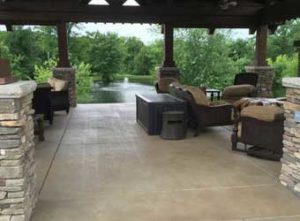
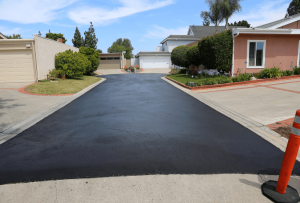
Quick answer: If your driveway’s concrete slab is still structurally sound — no major settling, no deep structural cracks, no drainage problems — driveway resurfacing almost always makes more sense than replacement. It costs a fraction of a full tear-out, takes a fraction of the time, and gives you a finished concrete driveway that looks brand new. Replacement is the right call when the damage goes deeper than the surface: a cracked or heaving slab, standing water, or a foundation that’s shifted from North Texas’s notoriously expansive clay soil. Here’s how to tell which situation you’re actually in.
What Driveway Resurfacing Actually Means
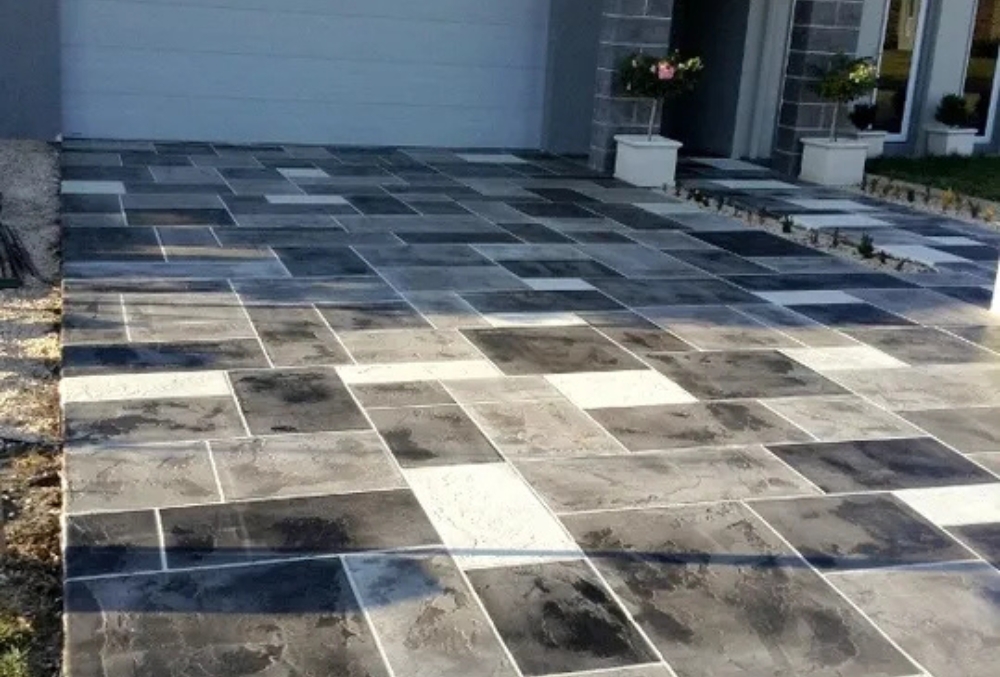
Driveway resurfacing — also called concrete resurfacing — applies a new decorative or protective layer directly over your existing slab instead of removing and repouring it. It corrects the cosmetic problems that make a driveway look old — fading, staining, a dated broom finish, hairline cracking — while using the structurally sound concrete that’s already there as the base. The result is a finished concrete driveway with a stamped, stained, or textured surface that looks like an entirely new installation, without the cost or disruption of demolition.
What “Replacement” Actually Means
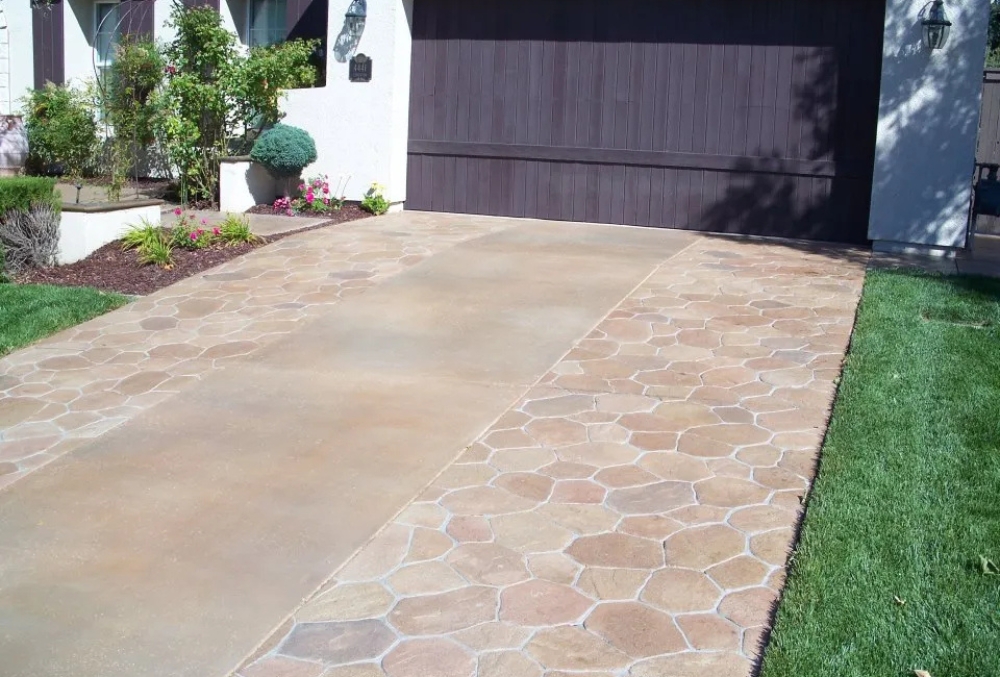
Replacement means removing the existing slab entirely and pouring a new one. It’s the more involved option — more labor, more time, and more cost — but it’s also the only real fix when the problem isn’t cosmetic. If your driveway has significant structural cracking, sections that have sunk or heaved, or drainage issues caused by grading and settling, resurfacing over that damage just delays the same problem instead of solving it. Our driveway resurfacing and replacement guide walks through the design options available if a full repour turns out to be the right call for your home.
How to Tell Which One Your Driveway Needs
A few signs point clearly toward resurfacing:
- Fading, discoloration, or a worn-out finish, but the slab itself is flat and stable
- Surface-level hairline cracks (not cracks you can fit a fingernail into)
- Minor staining from oil, tires, or years of weather exposure
- You want a design upgrade — stamped texture, color, or a modern finish — without the cost of starting over
And a few signs point toward replacement instead:
- Cracks wide enough to see daylight or shift underfoot
- Sections of the driveway that have visibly sunk, heaved, or tilted
- Standing water that pools instead of draining after rain
- Damage that keeps recurring after previous patch or repair attempts
If you’re only dealing with isolated cracks or minor damage rather than a driveway-wide problem, it’s also worth having a contractor assess whether targeted concrete repair can fix the issue before you resurface or replace anything at all.
Cost and Timeline: What Actually Changes
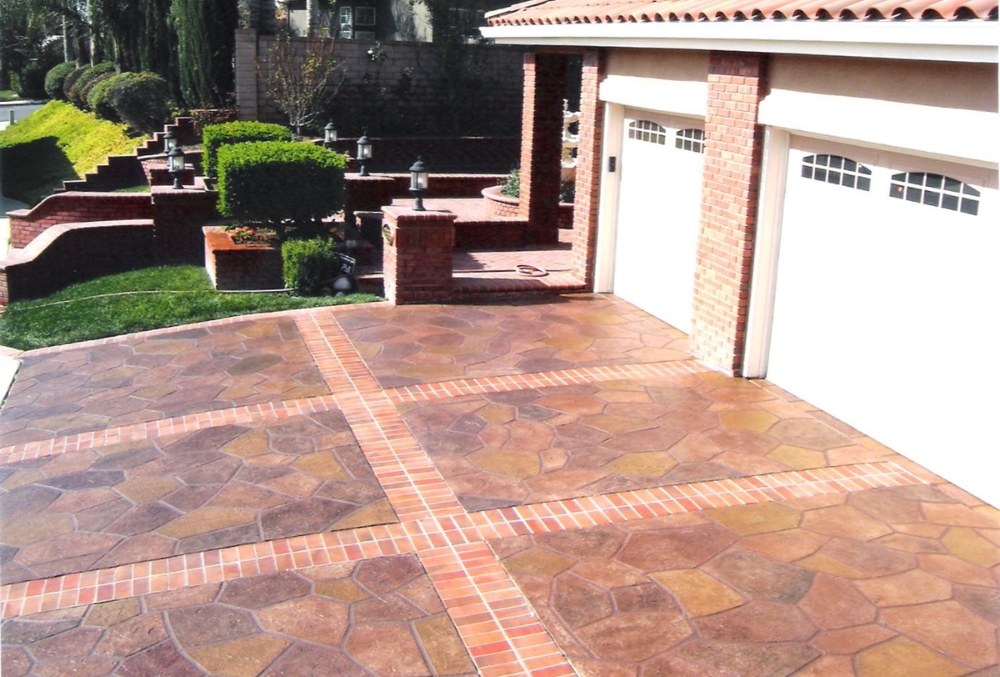
Resurfacing is the lower-cost, faster option in almost every case, since it works with your existing slab instead of removing it. A resurfacing project can typically be completed in a matter of days. Replacement takes meaningfully longer, since it involves demolition, hauling, base prep, pouring a new slab, and a multi-week cure time before the driveway can handle regular vehicle traffic. Because pricing depends heavily on square footage, existing slab condition, and finish selected, the most reliable way to compare your actual costs is a free, itemized estimate rather than a generic price range.
Why Dallas Homes Specifically Need to Get This Right
North Texas’s clay-heavy soil expands and contracts with seasonal moisture changes more aggressively than soil in most other regions, which is exactly why driveway damage here often isn’t purely cosmetic. A driveway that looks like a simple resurfacing candidate can be masking soil movement underneath that will crack right back through a new decorative layer within a year or two. That’s the main reason a professional assessment matters more than a DIY judgment call — a contractor who understands how Dallas-area soil behaves can tell you honestly whether resurfacing will hold up or whether you’re better off replacing now and avoiding a repeat repair.
Making the Decision
If you’re weighing driveway resurfacing against a full replacement, start with an honest look at what’s actually wrong: cosmetic wear points toward resurfacing, structural damage points toward replacement, and isolated cracks might only need concrete repair. Browse our full concrete driveway services to see the finishes and options available either way — whether that ends with a resurfaced slab or a brand-new finished concrete driveway. Dallas Decorative Concrete has been assessing and resurfacing driveways across North Texas for over 20 years, and every estimate includes an honest recommendation — not just whichever option costs more.
Frequently Asked Questions
Can you resurface a driveway with existing cracks? Minor surface cracks can usually be filled and resurfaced over. Structural cracks need to be addressed first, and in some cases that means replacement rather than resurfacing.
How long does a resurfaced driveway last? A properly installed resurfacing system can last many years with normal maintenance, provided the underlying slab was structurally sound to begin with.
Is resurfacing cheaper than replacement? Yes, in nearly every case. Concrete resurfacing uses your existing slab as the base, which avoids the demolition, hauling, and full repour costs that come with replacement.
Get an Honest Recommendation for Your Driveway
Not sure whether your driveway needs resurfacing, replacement, or just a repair? Request a free estimate and we’ll assess your slab in person and recommend the option that actually fits your driveway — not the most expensive one. Call (972) 808-5281 or request your free estimate online today.