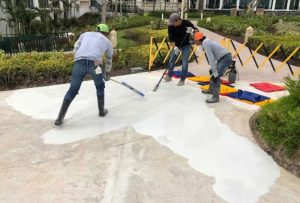
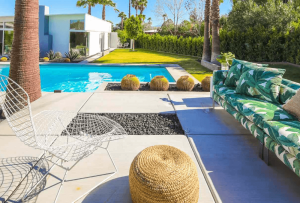
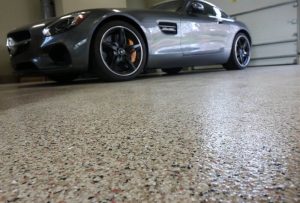
Quick answer: If your concrete driveway is structurally sound but looks flat, faded, or patchy, you don’t need a new pour to change it. Seven driveway finishes can give plain concrete a custom look: a stamped overlay, a stenciled spray-texture overlay, concrete stain, a solid-color overlay, engraved or saw-cut patterns, decorative borders and bands, and a fresh textured skim coat. The right one depends on how your slab looks now, how much traffic it takes, and the style of your home.
A plain gray driveway does its job, but it rarely adds much to a home’s curb appeal. After years of Dallas sun, rain, and tire traffic, most start to show it: uneven color, oil spots, mismatched patches, and a worn broom texture that makes the whole front of the house look older than it is.
The good news is that the concrete you already have can usually be the starting point for something much better. Below are seven driveway finishes our team uses to turn ordinary slabs into a finished concrete driveway with real character, plus a few simple decorative concrete design principles for picking the right one for your home.

Before You Choose: Is Your Driveway a Good Candidate?
Every finish on this list goes on top of, or into, your existing slab. That only works if the slab underneath is stable. Surface wear, fading, stains, and fine hairline cracks are all fair game. Wide cracks, sunken or heaved sections, and standing water after rain usually point to a base or soil problem, and North Texas’s expansive clay causes plenty of those. A new finish over a moving slab will crack right along with it, and no finished concrete driveway looks good for long on a failing base.
If you’re not sure which situation you’re in, our guide on whether an overlay or a full replacement makes more sense for your driveway walks through the warning signs in detail.
7 Driveway Finishes for a Plain Concrete Driveway
- Stamped Overlay

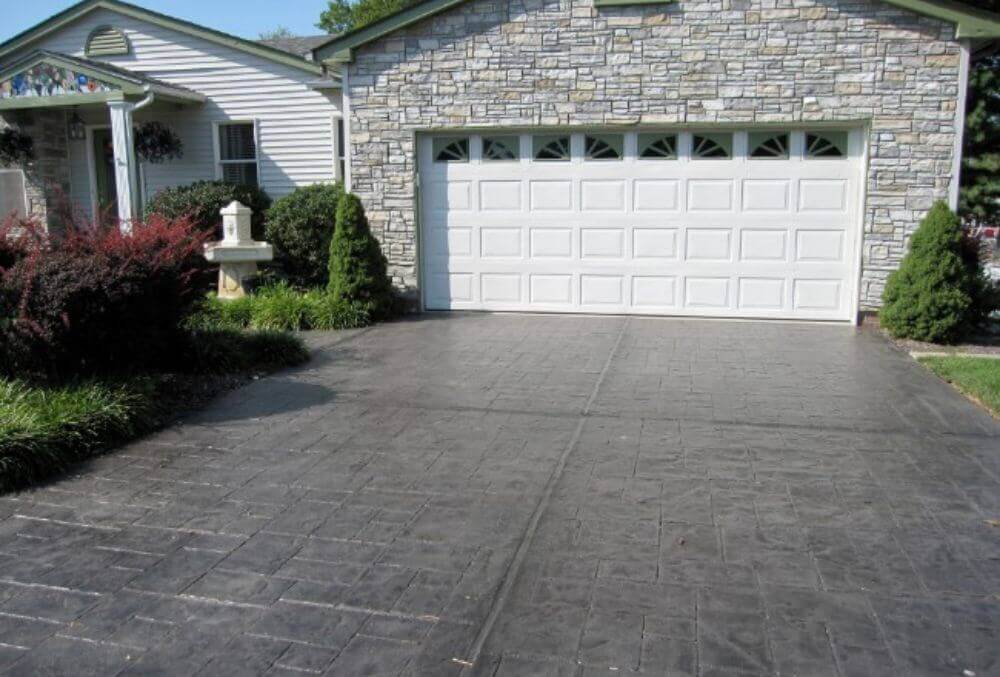
A stamped overlay is the biggest visual upgrade you can make without tearing anything out. A polymer-modified cement layer is applied over the existing slab, colored, and pressed with textured mats while it’s still workable. The result looks like natural stone, brick, slate, cobblestone, or wood plank, with real depth and texture rather than a painted-on look.
It’s the same technique we use for new stamped concrete installations, applied as a thinner layer over concrete you already have. Ashlar slate and cobblestone patterns are especially popular on Dallas driveways because they hide tire marks and everyday dirt well.
Best for: homeowners who want the most dramatic change and a high-end, custom look.
- Stenciled Spray-Texture Overlay
A stenciled overlay uses a paper stencil laid over the prepared slab, followed by a sprayed cement texture in one or more colors. When the stencil is pulled, it leaves crisp “grout lines” in patterns like brick, tile, or cobblestone. It’s thinner and flatter than a stamped overlay, so it reads as a patterned surface rather than a deeply textured one.
Because the sprayed texture has a fine grit to it, it offers good traction when wet, and lighter color choices help keep the surface cooler during a Dallas summer.
Best for: a patterned look on a tighter budget, or driveways that connect to walkways and patios where a matching pattern ties everything together.
- Concrete Stain (Acid or Water-Based)

Staining changes the color of the concrete itself instead of adding a new layer on top. Acid stains react chemically with the concrete to produce mottled, variegated earth tones: browns, tans, and soft greens that look a lot like natural stone. Water-based stains sit in the pores and offer a wider color range with more uniform, predictable results.
One thing to know up front: stain is translucent. It enhances what’s already there, so existing patches, oil spots, and color variation will still show through. On a slab that’s in good shape, that variation is part of the charm. On a heavily patched slab, one of the overlay options is usually a better fit.
Best for: clean, sound driveways where you want rich color while keeping the natural character of the concrete.
- Solid-Color Overlay
If your biggest complaint is that the driveway looks blotchy, with repair patches, old oil stains, and sections that never matched, a solid-color overlay is the most direct fix. A thin, colored cementitious layer covers the entire surface so the whole driveway reads as one clean, even tone.
Warm grays, tans, and sandstone colors are popular choices here because they complement brick and stone homes and stay cooler in full sun than dark charcoal tones. A solid-color base also works well combined with borders or saw-cut patterns (finishes 5 and 6) for extra definition.
Best for: patchy, stained, or mismatched driveways that need a uniform, clean look.
- Engraved or Saw-Cut Patterns
Engraving uses specialized saws and routers to cut shallow patterns directly into the existing concrete: large tile grids, diamond layouts, running-bond brick, or custom geometric designs. Cuts are often paired with stain or a colored overlay so the lines stand out as crisp “grout” joints.
Well-planned cuts can also line up with your existing control joints, so the pattern looks deliberate instead of fighting the slab’s natural break lines.
Best for: modern and transitional homes where clean lines and a tailored, geometric look fit the architecture.
- Decorative Borders and Bands
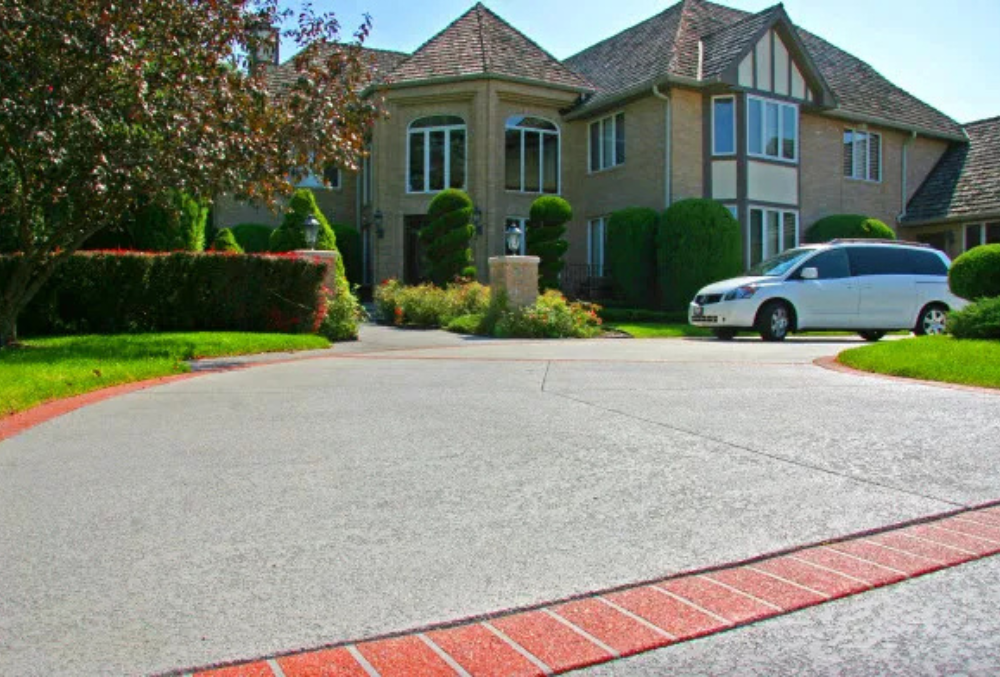
Sometimes the most effective upgrade is framing what you already have. A stamped, stained, or contrasting-color border along the edges of the driveway, or bands running across it, instantly makes a plain slab look finished and intentional. A contrasting apron where the driveway meets the street or a band that matches your front walkway can do a lot for curb appeal on its own.
Borders also work as a phased approach. You can start with a border now and add a full-surface finish later, keeping the same color palette.
Best for: homeowners who want a noticeable upgrade with a smaller scope, or who want to tie the driveway into walkways and landscaping.
- Textured Skim Coat (Broom or Rock-Salt Finish)
Not every driveway needs a pattern. A thin cementitious skim coat gives a worn, patchy slab a brand-new surface that can be finished with a fresh broom texture or a rock-salt finish, which leaves small, scattered pits for a subtle, weathered look with good traction.
It’s the most understated option on this list, but it can make a tired driveway look like a fresh pour, and it’s a solid base if you decide to add color, stain, or borders down the road.
Best for: homeowners who like a classic, simple concrete look and want it to look new again.
Comparing Driveway Finishes at a Glance
| Finish | Look | Hides Patches & Stains? | Best For |
| Stamped overlay | Stone, brick, slate, or wood texture | Yes | Maximum visual impact |
| Stenciled spray-texture overlay | Flat pattern with grout lines | Yes | Patterned look, good traction |
| Concrete stain | Translucent, variegated color | No, enhances existing surface | Sound slabs, natural-stone color |
| Solid-color overlay | Clean, uniform color | Yes | Blotchy or mismatched slabs |
| Engraved / saw-cut patterns | Crisp tile or geometric lines | Partially (pair with color) | Modern, tailored designs |
| Borders and bands | Framed, custom edges | Only where applied | Smaller-scope curb appeal boost |
| Textured skim coat | Fresh broom or rock-salt texture | Yes | Classic concrete, like-new surface |
How to Choose the Right Driveway Finish for Your Home
Good decorative concrete design starts with the house, not the driveway. A few questions help narrow the choice quickly:
What does your home’s exterior look like? Stone and brick homes pair naturally with stamped stone patterns and earth-tone stains. Modern homes tend to look best with solid colors and saw-cut geometric patterns.
What condition is the slab in? Patchy or stained surfaces call for an overlay that covers everything. Clean, even slabs are great candidates for stain or engraving.
How much sun does it get? Lighter colors stay noticeably cooler under Dallas summer sun and show less fading over time.
How is it used? Driveways that see heavy vehicles, basketball games, or foot traffic benefit from textures that add grip, like spray-texture, rock-salt, or stamped finishes.
Do you have HOA guidelines? Many Dallas-area HOAs regulate exterior colors, so it’s worth checking approved palettes before you choose.
It also helps to think about the driveway as part of the whole property. Matching the finish to your front walkway, porch, or patio creates a cohesive look that makes the entire exterior feel designed. You can browse more decorative concrete options for Dallas homes to see how these finishes work on other surfaces around the house.
Protecting Your New Finish
Whichever finish you choose, a quality sealer is what keeps it looking good. Sealing locks in color, protects against oil and tire marks, and helps the surface shed water. Most decorative driveway finishes should be resealed every two to three years, or sooner if water stops beading on the surface. Between sealings, rinse off oil and fluid drips promptly and sweep away debris that traps moisture.
Frequently Asked Questions
What is the best finish for a concrete driveway? It depends on your goals. A stamped overlay gives the most dramatic, high-end look. Concrete stain adds rich color to a slab that’s already in good shape. A solid-color overlay or textured skim coat is the most direct way to clean up a patchy, stained surface. For traction, spray-texture and rock-salt finishes offer the most grip.
Can you add a decorative finish to an existing concrete driveway? Yes, as long as the slab is structurally sound. Stamped overlays, stenciled overlays, stains, engraving, borders, and skim coats are all applied to or cut into existing concrete. Driveways with wide cracks, sunken sections, or drainage problems usually need repair or replacement first.
Will a new finish hide cracks in my driveway? Overlays can cover fine surface cracks and patches, but they won’t fix structural cracking. If the slab is still moving, often due to expansive clay soil in the Dallas area, cracks will eventually reappear through the new finish.
Is a stamped overlay slippery? Stamped overlays have natural texture from the stamping mats, and a slip-resistant additive can be mixed into the final sealer for extra grip when wet. If traction is your top priority, a stenciled spray-texture or rock-salt finish is an even safer choice.
How long do decorative driveway finishes last? With proper installation on a sound slab and regular resealing every two to three years, decorative driveway finishes can look good for many years. Longevity depends on the finish, how much traffic the driveway sees, and how well it’s maintained.
Which driveway finish is best for Dallas heat? Lighter colors reflect more sunlight, so they stay cooler and show less fading. Tan, sandstone, and light gray tones in a stamped, stenciled, or solid-color overlay are all good choices for driveways that sit in full sun.
Ready to Upgrade Your Driveway?
A plain concrete driveway doesn’t have to stay plain. With the right driveway finish, the slab you already have can become a custom, finished concrete driveway that adds real curb appeal to your Dallas home. Dallas Decorative Concrete has been designing and installing decorative concrete across North Texas for over 20 years, and we’ll give you an honest recommendation on which driveway finishes will hold up on your slab.
Explore our concrete driveway services or call (972) 808-5281 to request your free estimate today.