Your driveway absorbs more day-to-day abuse than almost any other concrete surface on your property. Between Dallas’s summer UV exposure, sudden downpours, dripping motor oil, and the occasional winter freeze, bare concrete wears down faster than most homeowners expect. A driveway coating is one of the most cost-effective ways to slow that wear down — without the expense of a full new pour.
If you’re comparing Dallas driveway coating options for your home, this guide walks through the six most common systems: what each one actually does, how long it holds up, and which one makes sense for your driveway, your budget, and our climate.
What Is a Driveway Coating?
A driveway coating is one of several driveway finishes — a protective layer applied directly over existing concrete, such as a sealer, topcoat, or resin system, that shields the slab from moisture, UV rays, oil, and everyday traffic. It’s different from installing a new driveway, which means removing the old slab (if one exists), rebuilding the base, and pouring fresh concrete from the ground up. A coating works with the concrete you already have, so it’s usually faster and less expensive than starting over — as long as the slab underneath is still structurally sound.
Top Driveway Coating Options for Dallas Homes
Penetrating Sealers (Silane/Siloxane)

Penetrating sealers soak into the concrete itself rather than sitting on top of it, so they don’t change the look or texture of your driveway — no shine, no film. They form a water-repellent barrier below the surface that blocks moisture intrusion and resists the salt and chemical exposure that come with periodic freeze-thaw swings. They’re the most affordable option and the easiest to reapply, which is why we recommend them as a baseline protection layer for almost every Dallas driveway, decorative or plain.
Acrylic Sealers

Acrylic sealers sit on the surface as a thin, low-sheen topcoat. They enhance color — a real advantage if your driveway is stamped, stained, or has integral color — and add a modest layer of UV and stain protection. They’re budget-friendly and easy to apply, but they wear faster under vehicle traffic than the other coatings on this list, so most homeowners plan to recoat every couple of years.
Polyurethane Coatings

Polyurethane topcoats are a step up in durability. They resist abrasion, UV yellowing, and chemical exposure noticeably better than acrylics, which makes them a solid match for Dallas’s intense summer sun. They come in a range of sheens, from matte to glossy, and hold color well over time without the chalking that lower-grade sealers can develop.
Epoxy Coatings

Epoxy is best known as a garage floor coating, but it also works on driveways that see heavy use — RVs, boats, multiple vehicles. It creates a hard, thick, chemical-resistant surface that stands up to oil drips and de-icing products. The tradeoff is UV sensitivity: straight epoxy can amber or chalk with direct sun exposure over time, so for an uncovered driveway we typically pair it with a UV-stable topcoat or steer homeowners toward polyaspartic instead.
Polyaspartic Coatings

Polyaspartic coatings solve epoxy’s UV weakness. They cure fast — often within a day — and hold color and gloss under direct sun far longer, which makes them the strongest all-around choice for an uncovered Dallas driveway that needs to handle heat, traffic, and years of exposure without ambering or fading.
Color-Enhancing Stain Topcoats

For driveways with acid or water-based staining, a clear topcoat sealer locks the color in and adds a layer of UV and wear protection over the stain itself. This isn’t a standalone structural coating — it’s the finishing step that protects a decorative stain job and keeps the color looking rich instead of washing out in the sun.
Comparing Your Options at a Glance
| Coating Type | Look | Durability | Typical Lifespan | Best For |
| Penetrating Sealer | Natural, no sheen | Good | 2–3 years | Baseline protection, any driveway |
| Acrylic Sealer | Low sheen, enhances color | Fair | 1–2 years | Decorative/stamped driveways on a budget |
| Polyurethane | Matte to glossy | Very good | 3–5 years | UV-heavy exposure, color retention |
| Epoxy | High-gloss, thick | Excellent (covered/low-UV) | 5+ years | Heavy loads, covered or shaded areas |
| Polyaspartic | High-gloss, thick | Excellent (outdoor) | 5–10 years | Full-sun Dallas driveways, fastest cure |
| Stain Topcoat | Clear, preserves stain color | Good | 2–3 years | Locking in acid/water-based stain jobs |
Choosing the Right Coating for Dallas’s Climate
Dallas puts a coating through more than most cities. Summer surface temperatures on dark concrete can climb well past the air temperature, which accelerates UV breakdown on lower-grade sealers. Sudden hard rains test how well a coating sheds water instead of trapping it against the slab. And while true hard freezes are rare here, the freeze-thaw swings we do get can still stress a coating that isn’t rated for it.
A few practical rules of thumb:
• Full sun, no shade trees: lean toward polyurethane or polyaspartic — they hold color and gloss the longest under direct UV.
• Heavy vehicle traffic (RV, boat, multiple cars): epoxy or polyaspartic handle repeated weight and abrasion best.
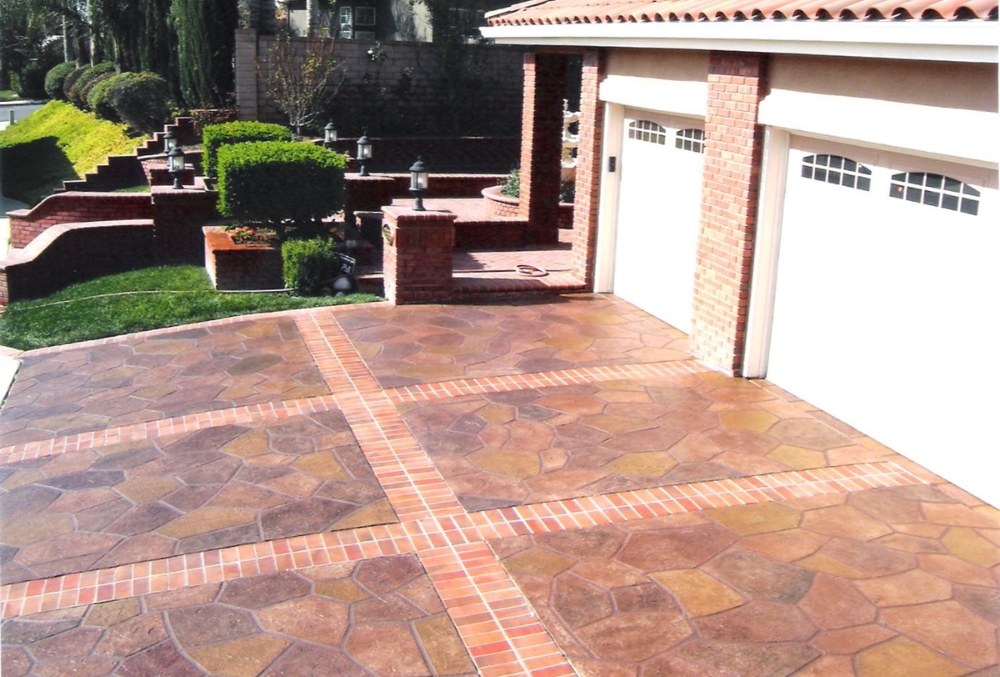
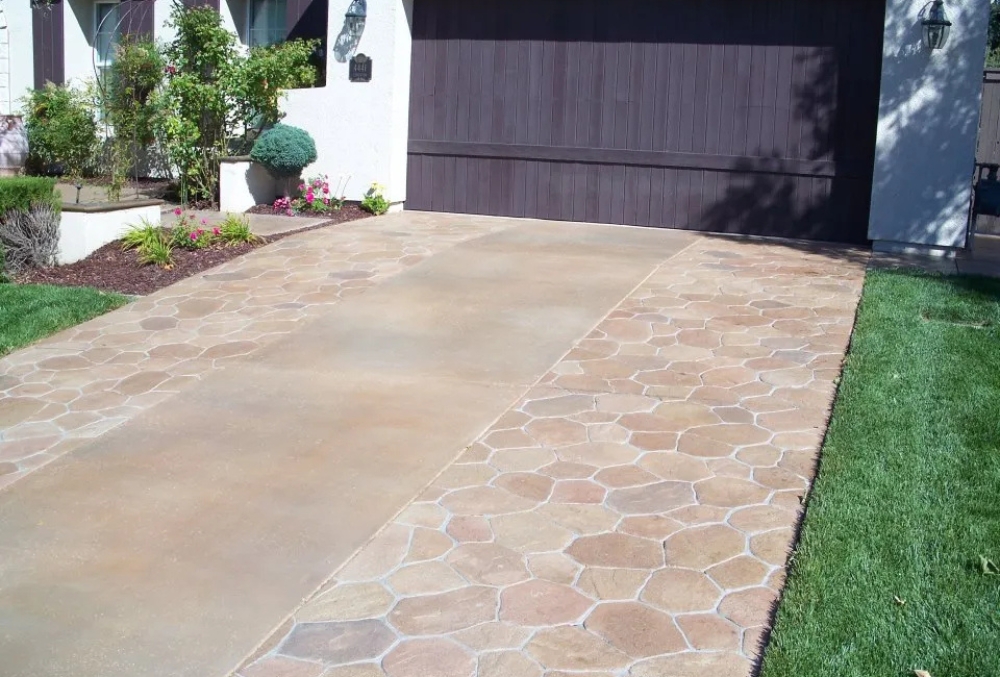
• Decorative stamped or stained driveway: an acrylic sealer or a dedicated stain topcoat protects these driveway finishes without hiding the texture.
• Tight budget, straightforward protection: a penetrating sealer is the most cost-effective option and still meaningfully extends the life of the slab.
Coating an Existing Driveway vs. Installing a New One
A coating protects and extends the life of concrete that’s still structurally sound — but it can’t fix a driveway that’s already failing. If you’re seeing deep cracks, sections that have settled or heaved (common with Dallas’s expansive clay soil), or a slab that’s simply reached the end of its service life, a coating will only mask the problem temporarily.
In those cases, it’s worth starting over the right way. Our team walks you through the full new driveway installation process — from site prep and base compaction through the pour, finish, and final seal — so the driveway you end up with is built to handle Dallas’s soil and weather for decades, not just years.
Keeping Your Driveway Coating in Good Shape
Most coatings need to be reapplied every 2–3 years to keep performing the way they’re supposed to — sooner if you notice water no longer beading on the surface, or if the sheen has visibly dulled. Between recoats, a few habits go a long way: rinse off oil and fluid drips promptly, sweep away leaves and debris that trap moisture, and avoid harsh deicing salts on sealed or coated surfaces.
It’s also worth knowing the difference between a coating issue and a concrete issue. Peeling or bubbling is usually a coating problem — normal wear, or moisture trapped underneath during application. Cracking, pitting, or an uneven surface is a concrete problem that a recoat won’t solve. If you’re not sure which one you’re dealing with, our breakdown of common driveway issues and what causes them can help you figure out whether you need a fresh coat or a deeper fix.
Ready for a Longer-Lasting Dallas Driveway?
Whether your driveway just needs a protective topcoat or it’s time to start over completely, our team can help you choose the right path. Request a free estimate and we’ll walk you through the best driveway coating — or full installation — for your home.
FAQ
What’s the difference between a driveway coating and a new driveway?
A coating is a protective layer — a sealer, topcoat, or resin system — applied over concrete that’s already structurally sound. A new driveway means removing the old slab if needed, rebuilding the base, and pouring fresh concrete. Coating is faster and less expensive; a new pour is the right call when the existing slab has serious cracking, settling, or damage a coating can’t fix.
How long does a driveway coating last in Dallas?
It depends on the coating. Penetrating sealers and stain topcoats typically last 2–3 years, acrylic sealers 1–2 years, and polyurethane or polyaspartic coatings can hold up 5–10 years, especially in full sun. We generally recommend planning to reseal every 2–3 years regardless of coating type.
Can you put an epoxy coating on an outdoor driveway?
Yes, but straight epoxy is UV-sensitive and can amber or chalk over time with direct sun exposure. For an uncovered Dallas driveway, we usually pair epoxy with a UV-stable topcoat or recommend polyaspartic instead, since it holds color and gloss much better outdoors.
Is polyaspartic or epoxy better for a Texas driveway?
For a driveway that sits in direct sun most of the day, polyaspartic is usually the better choice — it cures faster and resists UV fading far better than epoxy. Epoxy still makes sense for covered driveways or areas that see less direct sunlight.
How much does a driveway coating cost compared to a new pour?
Coating an existing driveway costs significantly less than a full new installation, since there’s no demolition, base rebuild, or new concrete pour involved. Exact pricing depends on your driveway’s size and the coating system you choose — we provide a free, itemized estimate after a quick on-site or photo assessment.
Can a coating fix a cracked driveway?
A coating can hide minor surface imperfections, but it won’t repair structural cracking, settling, or heaving. If your driveway has damage beyond the surface, that usually points to a base or soil issue that needs to be addressed before any coating will hold up long-term.
How soon can I drive on a newly coated driveway?
This varies by coating type — polyaspartic cures fast enough to allow foot traffic within hours and vehicle traffic within a day or two, while epoxy and polyurethane typically need several days to fully cure before regular vehicle use. We’ll give you an exact timeline based on the coating and weather conditions at the time of application.